_1789370435.png)
The Ultimate Guide to Australian Beers: Iconic Regional Brews & Craft Favourites
2026-09-14
.png)
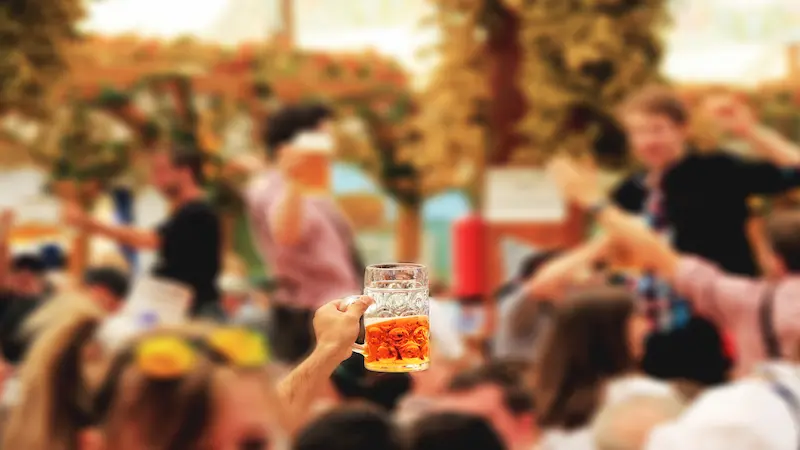
Oktoberfest is an annual Bavarian festival held in Munich at Theresienwiese, originating from a royal wedding celebration in 1810. The festival is known for its beer halls, traditional Bavarian food, music, clothing, and cultural celebrations. Six Munich breweries serve beer, with Festbier now the dominant style alongside traditional Märzen.
Every year, as late summer fades into the crisp chill of early autumn, millions of revellers, travel enthusiasts, and spirit lovers turn their sights toward Munich, Germany. There, sprawling across the 42hectare grounds of the Theresienwiese, unfolds Oktoberfest the undisputed heavyweight champion of world folk festivals.
What began as a 19thcentury royal wedding celebration has evolved into a global phenomenon. Attracting upwards of 6 to 7 million international visitors annually, Oktoberfest is far more than a giant beer garden; it is a masterclass in Bavarian heritage, hospitality, culinary craft, and brewing precision.
Here is the rich history, cultural evolution, and modern global footprint of the ultimate autumn spectacle written for enthusiasts at WineWhiskyWorld.com
Unlike many historic folk festivals rooted in agrarian harvests or religious holy days, Oktoberfest was born out of romance and royal diplomacy.
On October 12, 1810, Crown Prince Ludwig of Bavaria (later King Ludwig I) married Princess Therese of Saxe-Hildburghausen. The royal family invited the entire population of Munich to celebrate the union on the fields located just outside the city gates. In honour of the new Crown Princess, the meadow was dubbed Theresienwiese ("Theresa’s Meadow") a name locals still abbreviate today as simply "Die Wiesn".
The inaugural celebration culminated on October 18 with a grand horse race. The event was such a resounding triumph that the royal house decided to repeat the festivities the following autumn, giving birth to an enduring Bavarian tradition.
1810: Royal Wedding & Horse Race
│
▼
1811: Added Agricultural Show & Local Food Stalls
│
▼
1818: First Small Beer Booths & Bowling Alleys
│
▼
1872: Moved to September for Warmer Autumn Weather
│
▼
1896: Giant Beer Halls Replace Small Booths
One of the most frequent questions first time attendees ask is why Oktoberfest kicks off in mid-September.
In its earliest decades, the festival was indeed held strictly in October. However, as the event grew longer and attracted larger crowds, organizers realized that Munich’s October weather was often uncomfortably cold and rainy. In 1872, the opening was officially pushed back into late September to take advantage of longer daylight hours and warmer, milder autumn evenings. Today, the festival typically lasts 16 to 18 days, concluding on the first Sunday in October.
At the heart of the festival lies an unwavering commitment to brewing purity. To be served inside the official Oktoberfest halls, a beer must strictly adhere to the Reinheitsgebot (the German Beer Purity Law of 1516), which dictates that beer may only be brewed using four ingredients: water, malted barley, hops, and yeast.
Furthermore, only six historic Munich breweries collectively known as the Club of Munich Brewers are legally permitted to serve beer at the festival:
AugustinerBräu (Munich’s oldest independent brewery)
HackerPschorr
Hofbräu München
Löwenbräu
Paulaner
SpatenFranziskaner
Historically, the traditional style served was Märzen - a dark amber, full bodied lager brewed in March and aged in cool cellars over the summer months. However, since the late 20th century, the dominant style served in the tents has shifted toward Festbier. Festbier is paler in colour, lighter on the palate, yet deceptively potent (typically 5.8% to 6.3% ABV), crafted specifically to be smooth, refreshing, and drinkable in large quantities.
Beer is served exclusively in traditional one liter glass mugs known as a Maß (pronounced mass).
Today, Oktoberfest is considered the world’s largest folk festival, generating over €1 billion for the Bavarian economy through tourism, hospitality, transport, and retail.
|
Metric |
Annual Average / Metric |
|---|---|
|
Total Visitors |
6.3 to 7.2 Million guests |
|
Beer Consumed |
~6.5 to 7.4 Million Litres |
|
Festival Grounds Area |
42 Hectares (Theresienwiese) |
|
Large Beer Tents |
14 to 17 Massive Halls (Seating up to 10,000 guests each) |
|
Traditional Food |
~500,000 Roasted Chickens (Hendls), Pork Knuckles (Schweinshaxe), and Giant Pretzels |
Oktoberfest is an immersive sensory experience defined by deeply ingrained Bavarian rituals:
1.The Tapping Ceremony ("O'zapft is!"): The festival officially begins on opening day at noon sharp when the Mayor of Munich taps the first wooden keg of beer in the Schottenhamel tent. Upon successfully driving the tap into the barrel, the mayor shouts "O'zapft is!" ("It is tapped!"), followed by a 12gun salute signalling that all beer halls may begin serving.
2.Trachten (Traditional Dress): Wearing authentic Bavarian attire is a cherished tradition for locals and visitors alike. Men don Lederhosen (durable leather breeches paired with suspenders and check shirts), while women wear a Dirndl (a traditional bodice, blouse, full skirt, and apron).
3.The Music & Atmosphere: Inside the massive timber framed beer halls, brass bands play traditional German folk marches by afternoon before transitioning to rock anthems and global crowd pleasers by night, with thousands standing on benches singing in unison.
The infectious energy of Oktoberfest has inspired satellite celebrations on every corner of the globe:
Kitchener Waterloo (Canada): The largest Oktoberfest in North America, celebrating Southern Ontario's deep German heritage.
Zinzinnati (Cincinnati, USA): The largest celebration in the United States, famous for its running of the dachshunds and massive bratwurst consumption.
Blumenau (Brazil): The second largest Oktoberfest in the world, attracting over half a million visitors to Southern Brazil each October.
Whether you are planning a pilgrimage to the historic beer halls of Munich or hosting an autumn tasting party at home, Oktoberfest stands as a timeless celebration of craftsmanship, community, and fine beverage culture.
From deep dives into classic European lagers to reviews of world class single malts and craft tequilas, discover expert spirit reviews, cocktail recipes, and beverage guides today at WineWhiskyWorld.com!
_1786082455.jpg)