Peated vs. Unpeated Whisky: The Best Bottles for Every Palate
2026-10-08
.png)
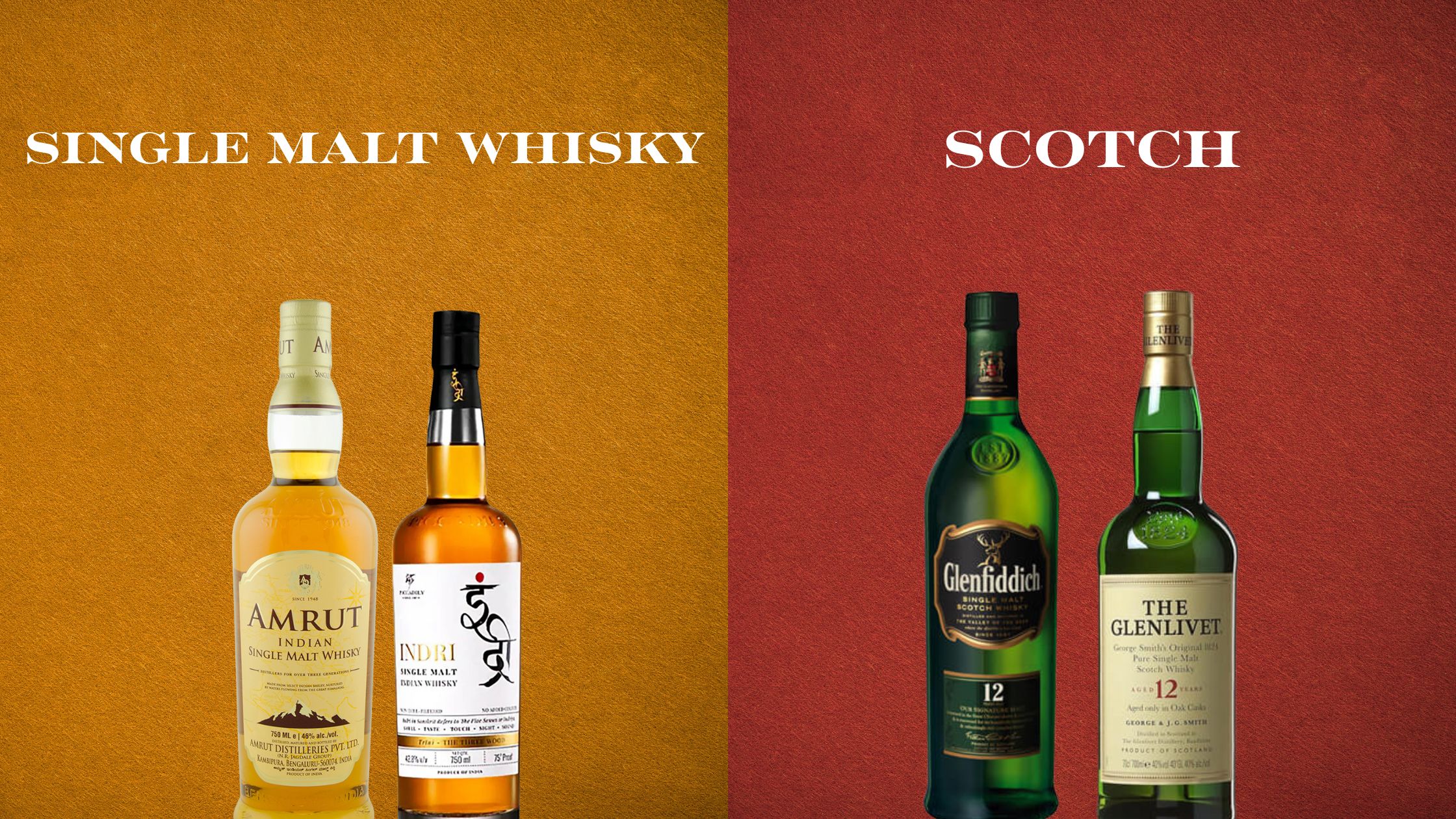
For decades, whisky culture fed you one lie that Older ones are always Better.
12 years? Respectable.
18 years? Impressive.
25 years? You've arrived.
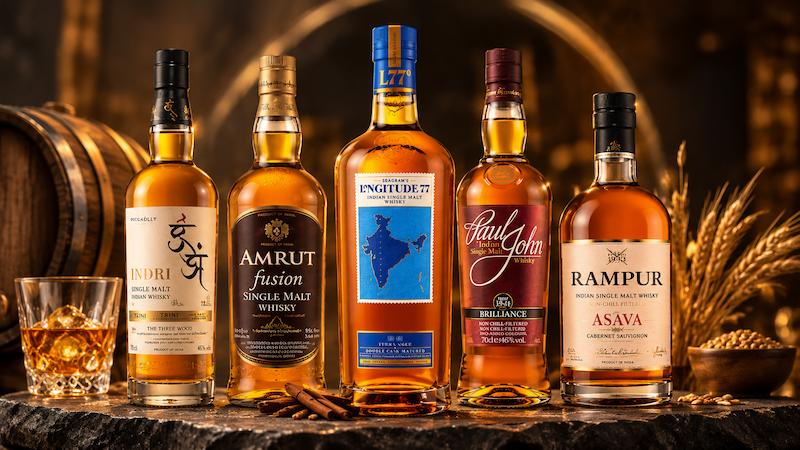
Then the Indian single malts walked in and said, "Hold my drink".
Here's the plot twist nobody saw coming: A 3-year-old Indian single malt can taste richer, bolder, and more complex than a 12-year-old Scotch. Not sometimes, OFTEN.
And before the whisky purists start typing angry comments, this isn't opinion. This is climate science, barrel chemistry, and Mother Nature on steroids.
So how does a "baby" Indian whisky outperform a pre-teen Scotch? Why are experienced drinkers quietly switching teams? And why does the whisky industry avoid talking about this? Buckle up, we're about to expose the age statement scam.
Age matters, but context matters more. A 12-year Scotch and a 3-year Indian malt aren't playing the same game. They're not even in the same league.
Comparing them by age alone is like:
Age tells you TIME. It doesn't tell you the transformation. And in whisky? Transformation is EVERYTHING.
Average temp: 5–15°C
What this means for whisky:
Average temp: 25–40°C
What this does to whisky:
That's not a disadvantage. That's a different strategy, and it's devastatingly effective.
Indian warehouses aren't climate-controlled whisky, they're INTENSE.
What happens inside those barrels:
Extreme contraction: The spirit literally breathes harder through the wood
Deep barrel penetration: Gets into wood layers. Scotch takes decades to reach
Rapid extraction: Vanilla, spice, caramel, everything comes out FAST
Accelerated oxidation: Flavor development on fast-forward
The result? 3 years in India can behave like 10–12 years in Scotland.
Think of it like this:
Different methods, Both can be delicious. One just gets there faster.
Most Indian single malts: 46% ABV or HIGHER
Most standard Scotches: 40–43% ABV
Scotch focuses on elegance and restraint. Indian malt delivers impact; neither is wrong. They're just different moods.
Neither is universally better. But they're wildly different drinking experiences.
Richer does not necessarily mean smoother. Richer meaning concentrated.
India: Loses 10–12% per year to evaporation
Scotland: Loses about 2% per year due to evaporation
What does that mean?
In 3 years, an Indian barrel can lose 30–36% of its volume. A Scottish barrel? Maybe 6% at the same time.
That massive evaporation concentrates:
It's not just aged whisky. It's BATTLE-TESTED whisky.
Let's talk about money, because this gets WILD. Typical Indian Pricing:
Indian Single Malt: ₹3,500 – ₹6,000
12-Year Scotch: ₹4,500 – ₹8,000
Wait, Scotch is MORE expensive despite being made cheaper? YUP, Here's why:
Scotch pricing includes:
Indian malt pricing includes:
The only honest answer: Depends on YOUR palate.
This isn't a battle. It's a preference shift. Like choosing between action movies and art films. Both are valid.
This belief came from Scotch tradition. And it's WRONG in India.
In Indian context:
A poorly aged 15-year whisky can taste flatter than a well-crafted 3-year malt.
What matters:
Yes, but not the way you were taught.
Age matters within the same climate, across different climates, it's misleading AF.
A 3-year Indian single malt isn't:
It's showing what heat, wood, and time can do differentially.
-clean_1787744332.png)