How to Check if Your Johnnie Walker Black Label is Original: The Ultimate 2026 Guide
2026-08-31
.png)
In India, “premium whisky” doesn’t always mean expensive. For most drinkers, premium is a feeling: how the whisky sits on the palate, how it behaves in a glass at a party, and how confidently you can place the bottle on the table without explanation.
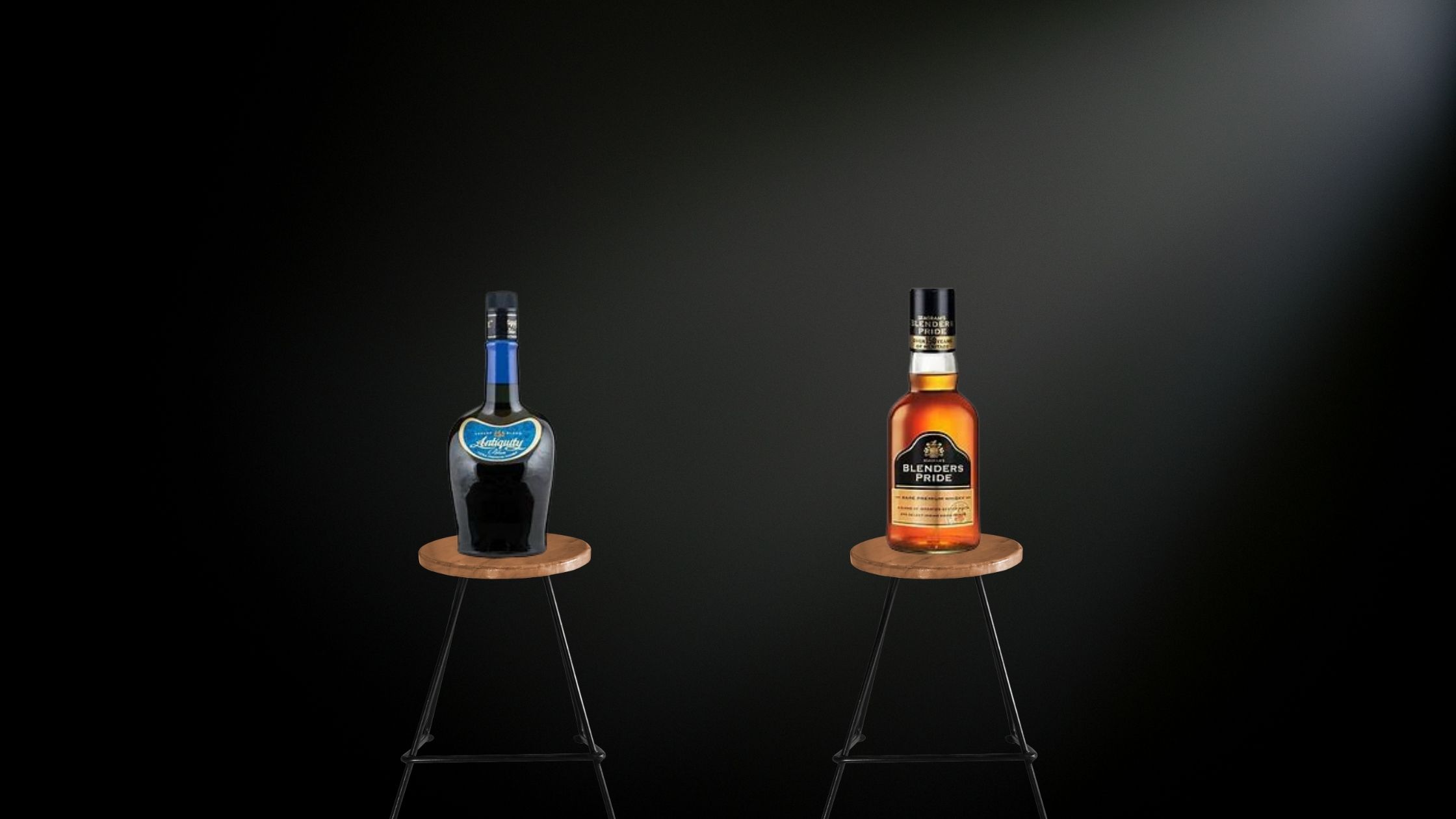
That’s exactly where Antiquity Blue and Blender’s Pride Reserve live.
They are not aspirational luxury whiskies. They are decision whiskies, bought again and again by people who know what they’re getting. And yet, there’s a constant debate among Indian drinkers:
If both cost nearly the same, which one actually feels more premium?
Let’s answer this properly, not with marketing language, but with real drinking logic.
Antiquity Blue has been around long enough to feel like part of Indian whisky culture. It’s a premium blended whisky from United Spirits, built on grain spirits with imported Scotch malts blended in.
It doesn’t shout. It doesn’t chase trends. Its appeal lies in reliability, a whisky many people trust blindly for social occasions.
Blender’s Pride Reserve is positioned as a step up from regular Blender’s Pride. It leans heavily into smoother blending, longer maturation, and a more refined image.
It aims to feel more modern and slightly more luxurious, especially for drinkers upgrading from entry-level blends.
Both whiskies sit at 42.8% ABV, which is standard for premium Indian blends.
On paper, they’re equally strong. In the glass, though, the experience differs.
This difference affects how smooth or harsh the first sip feels, especially neat.
Antiquity Blue plays safe and that’s not a bad thing.
It doesn’t evolve much from first sip to finish, but it stays consistent throughout.
Best described as: Familiar, easy, non-demanding.
Blender’s Pride Reserve shows a bit more intention.
There’s more balance here, and fewer rough edges.
Best described as: Polished, rounded, modern.
This is where most drinkers feel a difference.
If smoothness is your definition of premium, Blender’s Pride Reserve has the edge.
This is a safe bottle. No one feels disappointed seeing it on the table.
If your party leans toward small groups, quieter conversations, or corporate-style gatherings, Blender’s Pride Reserve fits better.
Its straightforward profile works best with bold, familiar Indian snacks.
The smoother texture pairs better with richer dishes.
|
Style |
Antiquity Blue |
Blender’s Pride Reserve |
|
Neat |
Average |
Better |
|
With water |
Good |
Very good |
|
With soda |
Excellent |
Good |
|
With cola |
Works |
Slightly masks flavour |
If you mostly drink with soda, Antiquity Blue holds up better.
If you drink neat or with minimal water, Blender’s Pride Reserve feels more premium.
This matters more than people admit.
On a bar counter, Blender’s Pride Reserve looks more premium at first glance.
Choose Antiquity Blue if:
It’s not flashy, but it rarely disappoints.
Choose Blender’s Pride Reserve if:
It’s better suited for slower sipping and smaller gatherings.
Prices vary by state due to excise duties, but broadly:
|
Whisky |
Approx Price (₹750ml) |
|
Antiquity Blue |
₹1,800 – ₹2,100 |
|
Blender’s Pride Reserve |
₹1,900 – ₹2,300 |
Delhi, Goa, and Haryana usually see lower prices, while Bangalore, Chennai, and Hyderabad are on the higher side.
If we’re being honest:
Overall winner on “premium feel”: Blender’s Pride Reserve
Winner on reliability and crowd comfort: Antiquity Blue
Neither is a wrong choice. The better whisky depends entirely on how you drink and who you drink with. And that, more than the label, is what defines premium for Indian whisky drinkers.
-clean_1787744332.png)
_1786449176.jpg)