_1791456276.jpg)
How to Read a Wine Label Like a Sommelier (French, Italian, and Spanish Labels Made Easy)
2026-10-08
.png)
Wine does not always improve with age. Most bottles are best consumed within one to two years, while structured wines like Bordeaux, Barolo, Riesling, and Vintage Port can mature for decades. Acidity, tannins, sugar, and balanced alcohol support aging. Proper temperature, humidity, darkness, and storage preserve wine quality.
One of the most ubiquitous beliefs in pop culture is that all wine improves with age. Movies show characters dusting off dusty, decades-old bottles, implying that any wine tucked into a dark corner will magically transform into a liquid masterpiece given enough time.
The reality? Over 90% of wine produced globally is designed to be drunk within 1 to 2 years of bottling. Keeping a standard grocery-store Cabernet Sauvignon or everyday Pinot Grigio in your kitchen cabinet for five years won't yield a vintage treasure it will yield flat, oxidized vinegar.
Understanding how wine ages, why most bottles decay rather than improve, and which rare expressions actually benefit from cellar storage will save you money and protect your palate. Here is the ultimate breakdown of wine aging myths, chemical truths, and the exact bottles worth keeping.
The romantic vision of dusty cellars aging every bottle to perfection is largely a marketing narrative born from luxury vintage traditions.
Modern winemaking emphasizes fresh, fruit-forward flavours accessible the day a bottle leaves the shop. Commercial yeasts, precise temperature-controlled stainless steel fermentation, and minimal oak exposure create vibrant wines meant for immediate enjoyment.
When an everyday wine sits past its prime:
Primary fruit aromas fade: Bright fresh fruit (strawberries, green apples, dark cherries) breaks down.
Acidity and structure collapse: Without heavy structural backbones, the wine tastes flabby and spirit-heavy.
Oxidation takes over: Small amounts of oxygen seep through the cork over time, turning red wines brick-brown and white wines dull amber, stripping away all vibrancy.
Aging wine is a delicate exercise in controlled slow-motion chemistry. Oxygen slowly interacts with the compounds inside the bottle, causing three major transformations:
Primary Flavours (Young): Direct fruit, flower, and herb aromas from the grape skin.
Secondary Flavours (Young/Mid): Flavours derived from fermentation and oak aging (vanilla, toast, butter, cedar, brioche).
Tertiary Flavours (Aged): Complex, evolved notes that emerge over time forest floor, leather, tobacco, mushroom, truffle, and dried fig.
In young red wines, tannins (compounds from skins, seeds, and oak) can feel harsh and astringent like over-steeped tea. Over years, tannin molecules bind together in long polymer chains and fall to the bottom of the bottle as sediment. This smooths out the mouthfeel, making the wine feel velvety.
Red wines lose pigment over time, shifting from vibrant purple-ruby to tawny brick-red. Conversely, white wines deepen in colour, shifting from pale straw to deep gold and amber as trace oxygen interacts with phenolic compounds.
Why can a vintage Bordeaux age gracefully for 30 years while an everyday table wine spoils in 30 months? It comes down to four structural pillars:
|
Structural Component |
Role in Aging |
Ideal Wine Examples |
|---|---|---|
|
High Acidity |
Acts as a natural preservative, keeping the wine fresh as fruit notes fade over time. |
German Riesling, Champagne, Sangiovese |
|
High Tannins |
Provides an antioxidant shield that softens and rounds out over decades. |
Cabernet Sauvignon, Nebbiolo, Syrah |
|
Residual Sugar |
High sugar levels act as an extraordinary natural stabilizer against decay. |
Vintage Port, Sauternes, Tokaji |
|
Moderate to High Alcohol |
Higher alcohol adds stability, though excess balance is required to prevent burn. |
Fortified wines (Port, Madeira) |
A bottle must possess at least two or three of these traits in high concentration along with flawless structural balance to survive long-term cellaring.
If you are looking to build a collection or cellar bottles for special occasions, focus on these specific styles and regions known for longevity:
Barolo & Barbaresco (Piedmont, Italy): Made from the Nebbiolo grape, these wines feature high tannins and soaring acidity, requiring 10 - 20 years to soften into notes of leather, rose, and truffle.
Rioja Gran Reserva (Spain): Pre-aged in oak and bottle by the winery, these Tempranillo-based reds hold up for decades.
Napa Valley Cabernet Sauvignon: Top-tier single-vineyard bottlings possess the fruit concentration and tannin structure to age 15 - 20+ years.
German & Austrian Riesling (Spätlese / Auslese): Soaring acidity and subtle residual sugar allow high-grade Rieslings to age effortlessly for 20 to 50 years, developing legendary petrol and honey complexity.
Vintage Champagne: High natural acid levels keep vintage sparkling wines crisp for 10 - 20 years, developing rich notes of brioche, hazelnut, and toasted butter.
Grand Cru Burgundy (Chardonnay): Top Cote de Beaune whites (like Meursault or Puligny-Montrachet) age into rich, nut-and-honey masterpieces over 10–15 years.
Vintage Port & Madeira: High alcohol and high sugar make these virtually immortal. A quality Vintage Port can easily age for 50 to 100 years.
Sauternes & Tokaji: Botrytized sweet wines balance intense sugar with piercing acidity, thriving in cellars for half a century.
DRINK WITHIN 1–2 YEARS
Pinot Grigio, Prosecco, Sauvignon Blanc, Beaujolais Nouveau, Rosé, Boxed Wine
DRINK WITHIN 3–5 YEARS
Entry-level Merlot, Chianti DOCG, Argentine Malbec, New World Pinot Noir
CELLAR FOR 10–30+ YEARS
Grand Cru Burgundy, Vintage Bordeaux, Barolo, Vintage Port, German Riesling
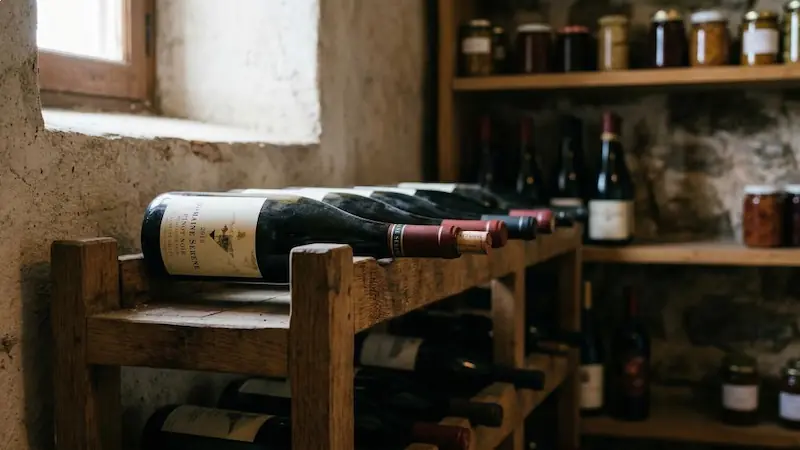
Even an age-worthy $300 bottle will spoil in months if stored incorrectly. If you plan to hold bottles long-term, ensure these four environmental conditions are met:
Constant Temperature: Keep bottles between 12°C and 15°C (53°F - 59°F). Temperature fluctuations cause liquid to expand and contract, pushing air past the cork.
Horizontal Placement: Store corked bottles on their side to keep the cork moist. A dry cork shrinks, letting in excess oxygen.
Darkness: UV light damages organic compounds, causing "light strike" that ruins aromas.
Humidity: Maintain 60% - 70% relative humidity so corks don't dry out from the outside.
Wine aging is not an automatic upgrade it is a transformation. Most wines are crafted to bring immediate joy with fresh, fruity aromas. Save your cellar space for structured classics built with the tannins, acidity, and sugar required to stand the test of time, and pop the cork on everything else tonight! Cheers!