How to Open a Wine Bottle Without an Opener (7 Easy Methods)
2026-03-05
.png)
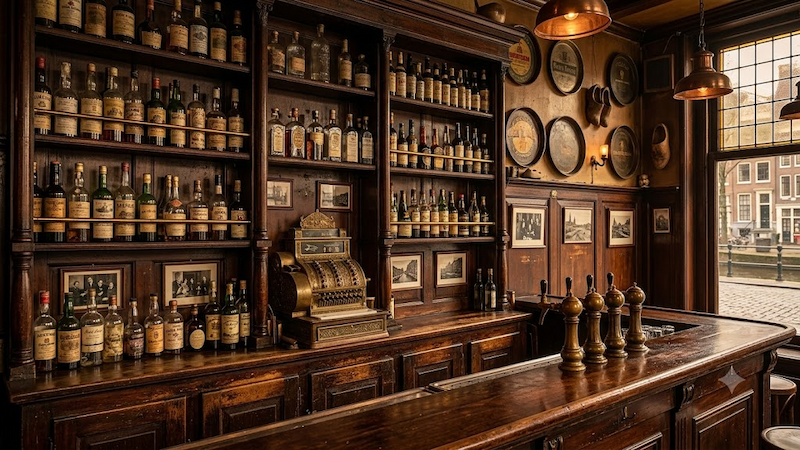
Amsterdam’s Brown Cafés, London’s traditional pubs, and Germany’s Eckkneipen and Brauhäuser reflect a shared European tavern culture rooted in history, community, and hospitality. Their timeless interiors, classic drinks, regional food, and welcoming atmosphere continue to preserve local traditions while offering meaningful social spaces for residents and travelers alike.
If you step off the high-street fashion boulevards of Europe and duck down a side alley, you will often find a sanctuary that feels untouched by time. In London, it’s a corner pub with a faded gilded sign. In Amsterdam, it’s a Bruin Café tucked along a canal.
While miles apart geographically and distinct in their drinks menu, the Amsterdam Brown Bar and the Traditional London Local share a nearly identical cultural DNA. They are not merely places to buy alcohol; they are public living rooms, social equalizers, and living museums of neighborhood history.
Here is a look at the uncanny parallels between these two European icons and how Germany’s drinking culture completes this trio of European tavern traditions.
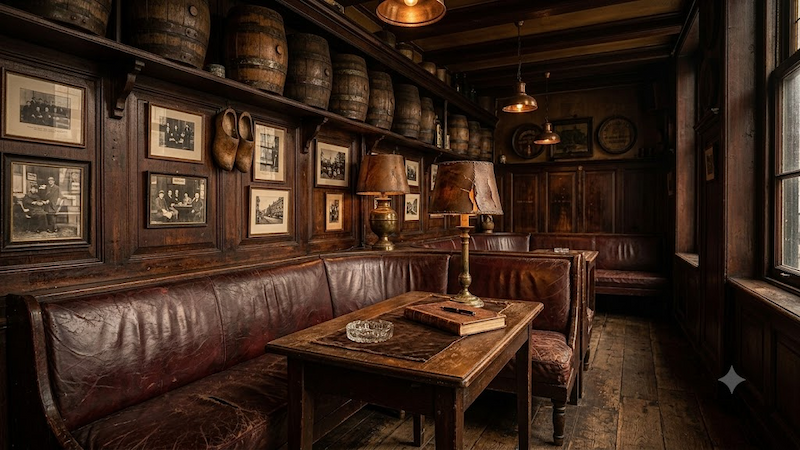
The name Bruin Café (Brown Bar) in Amsterdam literally describes its interior. For centuries, these bars accumulated a deep mahogany patina on their wooden paneling, ceilings, and furniture historically stained by decades of pipe and tobacco smoke, combined with dark wood finishes designed to mask grime.
Walk into a traditional London pub, and you are greeted by the exact same visual palette. Dark oak counters, worn wooden floorboards, stained glass windows, and plush, faded leather banquettes create an atmosphere that feels warm, moody, and deeply historic.
In both cities, the design philosophy is the exact opposite of modern, minimalist cocktail bars:
Dim, warm lighting rather than harsh LEDs.
Vintage clutter from antique brass taps and old framed photos to vintage beer trays mounted on the walls.
A feeling of permanent permanence: Nothing feels temporary or corporate.
Every culture has a word for cozy hospitality, but the Dutch and the British have turned it into an architectural art form.
In Amsterdam, it is Gezelligheid: A word with no direct English translation, describing a feeling of comfort, togetherness, warmth, and home. A brown bar is designed to be small, intimate, and quiet enough that conversation flows easily across tables.
In London, it is the Pub's "Third Place" Status: The local pub isn't a nightclub; it is an extension of home a "third place" between work and domestic life.
In both bars, you rarely find loud, pulsing music. Instead, the primary sound is the hum of human voices, clinking glassware, and the gentle thud of a wooden dartboard or a beer coaster hitting a table.
Neither the brown café nor the neighborhood pub exists to show off culinary haute cuisine, yet both have mastered the art of humble, satisfying drinking food and classic serves.
|
Element |
Amsterdam's Brown Café |
London's Local Pub |
|---|---|---|
|
Core Drink |
Dutch Pilsner (Pils) served with a foam head, or Jenever (traditional Dutch gin). |
Cask Ale, Bitter, or Stout poured straight from the handpump. |
|
The Signature Combo |
Kopstootje ("Little Headbutt"): A shot of Jenever served alongside a cold beer chaser. |
A Pint & A Chaser: A classic pint of ale paired with a pour of Scotch or Gin. |
|
The Snack |
Bitterballen: Crispy, deep-fried beef croquettes served with sharp mustard. |
Bar Snacks: Pork scratchings, Scotch eggs, sausage rolls, or a bag of salted crisps. |
You cannot talk about northern European tavern culture without looking at Germany. Germany approaches this neighborhood drinking culture through two distinct lenses: the Eckkneipe and the Brauhaus.
The Eckkneipe (literally "corner pub") is Germany’s direct counterpart to the local London pub and the Dutch brown bar. Found on neighborhood corners in cities like Berlin, Hamburg, and Cologne, they feature:
Dark, wood-paneled walls and dim lighting.
A tight-knit community of regulars (Stammtisch).
A focus on simple, regional draft beers (a crisp Pilsner in Berlin, a Kölsch in Cologne, or an Altbier in Düsseldorf).
Much like the Dutch concept of Gezelligheid, Germans visit their Eckkneipe for Gemütlichkeit a state of warmth, friendliness, and belonging.
While the Eckkneipe is small and quiet, Germany’s Brauhaus (Brewery House) takes that same historic warmth and scales it up. Featuring long, communal wooden tables where strangers sit side-by-side, the Brauhaus centers on fresh, unpasteurized beer brewed on site paired with hearty regional food (like pork knuckles, pretzels, and schnitzel).
In an era where nightlife is increasingly dominated by sleek rooftop bars, hyper-concept mixology lounges, and digital reservations, the Dutch Brown Café, the British Pub, and the German Kneipe continue to thrive for one simple reason: human connection.
They don't care about your dress code, they don't require an Instagram aesthetic, and they treat the local regular and the curious traveler with the exact same unpretentious hospitality. They remind us that the best backdrop for a great drink has always been dark wood, dim lights, and good conversation.